After 5 consecutive losses, the 6th bet is $32, and total money risked is $63. All to win $1. A losing streak of 10 would require a $1,024 bet with $2,047 total exposure.
Critical flaw: Table limits cap the maximum bet (often $500-$1,000), breaking the doubling sequence. A sufficiently long losing streak is not just possible. It is guaranteed to occur given enough play.
Reverse Martingale (Paroli)
Double your bet after every win. When you lose, reset to the base stake. The goal is to capitalise on winning streaks while limiting downside. The risk? All accumulated winnings are lost on a single loss during a streak.
D'Alembert Strategy
Increase your bet by one unit after a loss; decrease by one unit after a win. Applied to even-money bets (Red/Black, Even/Odd, 1-18/19-36).
Example (unit = $5): Start at $5. Lose, bet $10. Lose, bet $15. Win, bet $10. Win, bet $5.
Advantage over Martingale: slower progression means longer survival with a limited bankroll. Limitation: the negative expectation per spin remains unchanged.
Fibonacci Strategy
Follow the Fibonacci sequence (1, 1, 2, 3, 5, 8, 13, 21, 34, 55, 89...), moving one step forward after a loss and two steps back after a win. Best used on even-money bets.
After a long losing streak, the required bet can escalate rapidly. The system shares the same table-limit collapse as Martingale, though it gets there more slowly.
James Bond Strategy
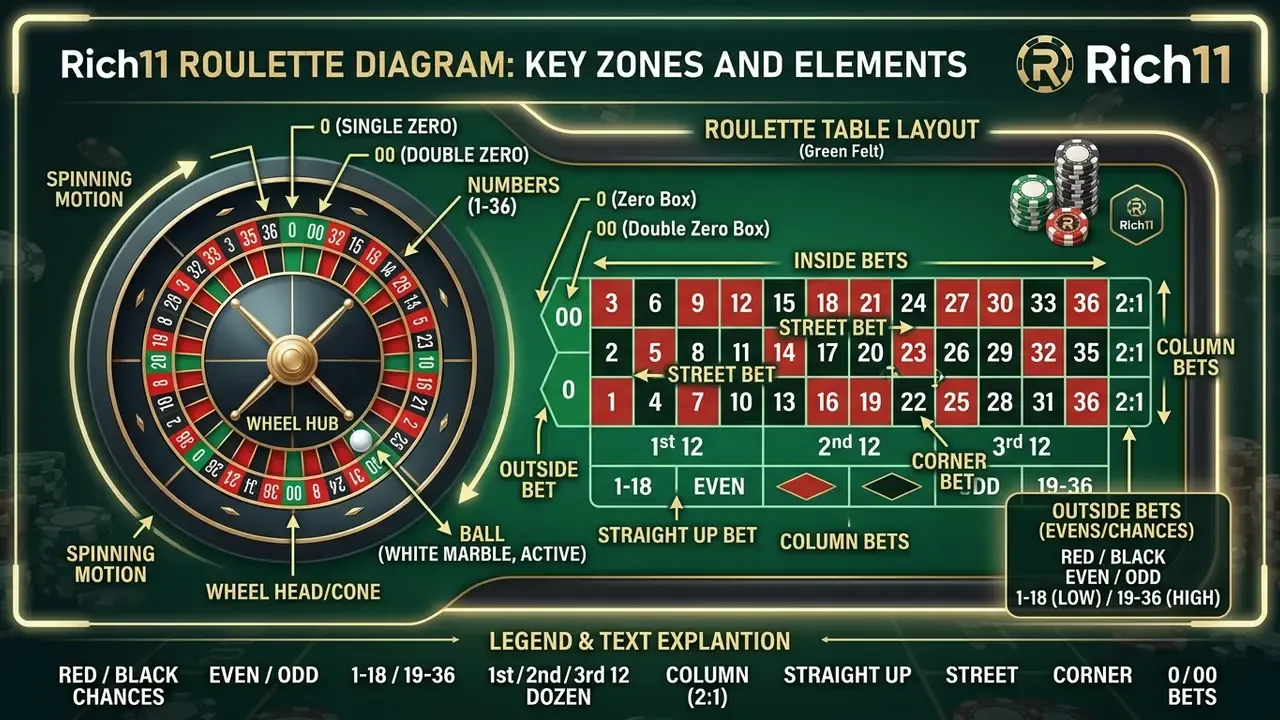
A flat-bet system covering 25 of 37 numbers with a $200 total stake:
- $140 on 19-36
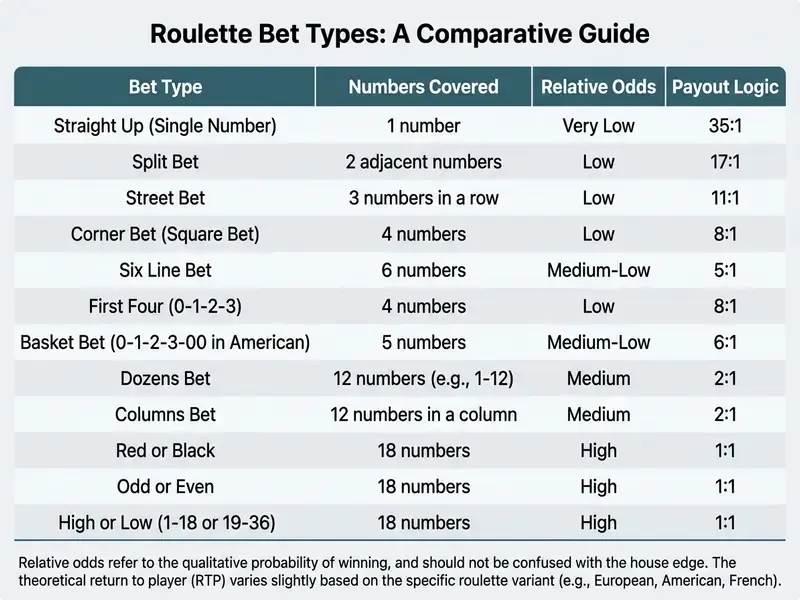
- $50 on the Six Line covering 13-18
- $10 on 0
If 19-36 hits: win $80. If 13-18 hits: win $100. If 0 hits: win $160. If 1-12 hits: lose $200.
The coverage looks impressive (25 out of 37 numbers), but the expected loss per round remains the same as any other combination of bets on a European wheel. The 12 uncovered numbers (1-12) will hit approximately 32.4% of the time, causing full-stake losses.
Why all systems ultimately fail: Every betting system operates under the same constraint: the expected value per spin is negative. Systems only redistribute when you win or lose, not whether you profit over time. With a finite bankroll and table limits, the mathematical recovery mechanism breaks before profit is secured.